Love Nikki-Dress UP Queen
- 4.2
- Rating
- 10.00M
- Installs
- Free
- Price

 Analysis by App-foxy
I first approached Love Nikki-Dress UP Queen as a dress-up game, but it quickly became clear that its appeal is broader than choosing a nice-looking outfit. It combines role-playing progression with fashion decisions, collecting, and story-driven play, so it works well for a short visit or a longer session when I want something calmer than a combat-heavy game. The main attraction is the freedom to build looks from a large wardrobe and adjust them for different situations rather than simply dressing a character once and moving on.
That makes it an interesting choice for a shared household device. One person can enjoy the visual styling, another can follow the story, and someone else may prefer the challenge of improving a score or completing a collection. I would still treat it as an individual game rather than a communal account, because progress, purchases, and personal choices are easier to manage when one player is responsible for the profile. For anyone deciding whether it is suitable at home, the important questions are not only whether the clothes look appealing, but also whether the player is comfortable with ongoing progression and optional spending.
How the game feels when different people use the same device
In my experience, the best shared-use scenario is a device passed between people who want to take turns rather than play simultaneously. A younger player might enjoy assembling an outfit, while an older sibling or parent may be more interested in helping interpret a challenge and comparing the result. The game gives both activities a place, although it remains centered on the player’s own progress, so I would not expect it to function like a true two-player experience.
You May Also Like

 Pandora - Music & Podcasts
Pandora’s Music Is Easy to Start, but Harder to Recover
Pandora’s strength is its low-effort path from a seed to a station. Its weak spot is how much confidence it asks you to place in connection, setup, and quiet recovery.

 AccuWeather: Weather Radar
AccuWeather Review: A Quick, Clear Forecast for Everyday Decisions
For everyday plans, the best forecast is the one you can understand quickly. AccuWeather makes rain timing, radar, and local conditions easy to act on, with a few trade-offs.

 Hill Climb Racing
Why Hill Climb Racing Still Turns Crashes Into One More Run
A tiny car, a bumpy hill and one more upgrade: Hill Climb Racing keeps resurfacing because its simple chaos makes every near-miss feel personal.

 AliExpress - Shopping App
AliExpress Makes Global Shopping Feel Personal, but Shoppers Bear the Risk
AliExpress turns a global marketplace into a pocket-sized discovery engine. Its reach is useful, its shopping loop compelling, and its trade-offs easy to miss.

 Lords Mobile: Kingdom Wars
Lords Mobile Is a Kingdom-Building Routine, Not a Quick Match
A case-by-case verdict on the building, battles, device demands, and social commitments that make Lords Mobile rewarding for some players and exhausting for others.

 PDF Scanner app - TapScanner
TapScanner Makes Paperwork Easier to Capture, Check, and Share
TapScanner makes scanning with a phone feel less like a rescue operation and more like a dependable step in getting work done. Its capture tools are useful, though not flawless.
More From Our News Desk
View All News


Short sessions are particularly practical in a household. Someone can open the game while waiting for an appointment, complete a small objective, and hand the device back without needing a long uninterrupted battle or multiplayer match. On a larger screen, the clothing details are easier to inspect; on a phone, the experience feels more personal and convenient. Either way, I found that the game encourages browsing and experimenting, which makes it easy for another person nearby to offer an opinion without taking over the entire session.
There is also a useful social rhythm in choosing between a safe outfit and a more imaginative one. If a child asks an adult for help, the adult can discuss why a particular style fits the situation instead of simply selecting everything. That turns the wardrobe into a small creative exercise. The limitation is that this cooperation is informal: the game itself should not be treated as a substitute for separate profiles, household rules, or supervision around spending.
The role-playing category matters here because the wardrobe is not isolated from progression. Clothing choices connect with the broader journey, so a player who only wants a free-form fashion editor may find the surrounding systems more involved than expected. I enjoyed having reasons to revisit the wardrobe, but I also noticed that the game asks for patience. It is better suited to someone who likes gradual improvement than to someone looking for an instant styling sandbox with every option available immediately.
Keeping a shared device from becoming a shared account
Before letting several people use the same phone or tablet, I would establish a simple boundary: one person should be the main account holder and the others should be visitors who give advice or take occasional turns only when the owner is present. That approach avoids confusion over which choices were intentional, which items were earned, and whether a purchase was made by mistake. Since the game includes progression, casual experimentation can affect the experience for the person who returns later.
I would also agree on a rule that no one spends money without asking first. The game is free to download, but optional in-app items range from $0.99 to $99.99 each, which is a wide enough range to make a shared-device conversation worthwhile. Even if a player never feels pressured to buy anything, the possibility of optional purchases means the device owner should remain in control of payment decisions. A quick check before confirming anything is more reliable than assuming every player understands the consequences.
Another practical boundary is time. Fashion games can feel harmless because they are not built around constant action, yet collecting and improving outfits can encourage “one more task” sessions. In a household, I would set a stopping point before opening the game, especially if the device is also used for schoolwork, communication, or bedtime routines. This is not a criticism of the design; it is simply a recognition that low-stress games can still be absorbing.
For a first session, I recommend letting the main player explore without immediately handing the device around. That gives the owner a chance to understand the menus, story flow, and wardrobe organization. After that, shared advice becomes more enjoyable because everyone knows which actions change progress and which are merely cosmetic. This small separation prevents a common household problem: several people think they are helping, while the account holder feels that their game has been altered.
The current version is 11.1.2, and the game runs on Android 5.0 or later. Those details make it accessible on many older devices, but compatibility alone does not guarantee a smooth shared experience. Storage space, battery condition, and screen size can still affect comfort, particularly when several people are waiting for their turn. I would test it on the actual household device rather than assuming that an older operating system means the game will feel identical everywhere.
Coordinating choices without taking the fun away
Coordination works best when each person has a defined role. One player can make the final decisions, another can suggest color combinations, and a third can help compare alternatives. I prefer this arrangement to passing the device after every tap because it keeps ownership clear while still making the wardrobe feel collaborative. It also teaches a useful lesson about creative disagreement: the most visually dramatic outfit is not always the one that best suits the challenge.
A helpful routine is to ask the player to explain the goal before anyone recommends clothing. That prevents advice from becoming random scrolling through the wardrobe. Once the goal is understood, helpers can focus on a few meaningful changes, such as adjusting the overall style or replacing one distracting item. This is a more satisfying use of shared time than having someone else assemble the entire look.
There is a trade-off between efficiency and discovery. An experienced player may know which choices are likely to work and can guide a newer one toward them, but too much guidance removes the pleasure of finding an unexpected combination. I would let a child or first-time player try an outfit independently, then discuss the result afterward. The game is at its most enjoyable when advice supports experimentation instead of turning every decision into a correction.
Coordination is also useful when the player becomes interested in collecting. A household can agree on personal goals, such as completing a favorite style or saving resources for a particular kind of item, rather than chasing every attractive option. That approach reduces impulsive decisions and gives the game a clearer direction. It also makes it easier to recognize when a player is no longer enjoying the process and is simply trying to keep up with an ever-growing wardrobe.
I would not recommend using one profile as a testing ground for several unrelated players. The story and collection can become difficult to follow when different people make choices for different reasons. If separate profiles are available through the normal account setup, each person should use their own; if not, the safest arrangement is one clearly designated player with everyone else acting as occasional collaborators. I would avoid promising a particular profile feature unless it is visible on the device being used.
Age, trust, and the tone of the experience
The game carries a Teen content rating, so I would not place it automatically in the same category as a children’s-only dress-up toy. That does not make it unsuitable for every younger player, but it does mean an adult should consider the child’s maturity, reading ability, and understanding of optional purchases. The rating is a useful starting point, not a replacement for knowing who will play and how the device is managed.
Trust matters more than technical convenience in a shared household. A player should know which actions are personal, which choices affect ongoing progress, and when to ask before spending. I would explain these expectations before handing over the device, especially if the player is unfamiliar with games that combine free access and optional purchases. The conversation can be brief, but it should be clear: choosing an outfit is one thing, while confirming a paid item is another.
The game may suit a teenager who enjoys fashion, stories, and long-term collecting, particularly if they like making decisions at their own pace. It may be less suitable for someone who becomes frustrated by gradual unlocking, repeated challenges, or the temptation to compare their wardrobe with an imagined ideal. I would also skip it for a player who wants competitive action, direct multiplayer teamwork, or a simple editor with no progression around it. A conventional puzzle game or a straightforward creative app would be a better match in those cases.
For adults, the main question is whether the player can use the game independently and responsibly. I would check the device’s purchase arrangements and make sure the account owner knows how confirmations work before allowing unsupervised use. I would not describe the game as dangerous or unusually aggressive; its appeal is generally softer and more decorative. Still, a calm presentation does not remove the need for sensible boundaries when a game includes collecting and optional spending.
The developer is Elex, and the game has built a substantial audience: it has passed 10 million installs, with a 4.2 average from roughly 456 thousand ratings and about 114 thousand written reviews. Those figures suggest that its fashion role-playing formula has reached far beyond a small niche. They do not guarantee that every household will enjoy it, but they do help explain why a new player may find a deep, established-feeling experience rather than a tiny one-off wardrobe toy.
Where it stands beside other role-playing choices
Compared with action-focused role-playing games, this one is much less about reflexes and combat pressure. I can spend time considering presentation, collecting pieces, and following the character’s journey without needing fast reactions. That makes it a better fit for relaxed evening play or a shared conversation around the screen. The trade-off is that players who expect exploration, tactical battles, or constant mechanical variety may find the fashion-centered structure too narrow.
Compared with a basic dress-up app, it offers more reason to return. The role-playing framework gives outfits context, and the player’s choices feel connected to a longer path rather than existing only as isolated screenshots. I found that motivating when I wanted a sense of progress, but it also means I could not treat every item as immediately available for casual experimentation. Someone who wants instant access to a complete wardrobe may prefer a simpler editor.
It also differs from competitive fashion games that focus mainly on quick voting or public comparison. Here, the personal journey and collection are more important to my experience than winning a single visual contest. That can feel less stressful, but it may also seem slower for players who need direct competition to stay interested. The right choice depends on whether the player enjoys building a style over time or wants a rapid series of head-to-head results.
The free price lowers the barrier to trying it, which is helpful for a household that is still deciding whether the format suits them. However, free access should not be confused with a completely cost-free experience. The optional purchase range is significant, and the presence of paid items can change how comfortable the game feels for different families. I would begin with a no-purchase agreement and reassess only after the player understands the normal progression.
Small habits that make the wardrobe easier to enjoy
My first practical tip is to avoid changing too many parts of an outfit at once when trying to understand why a result feels weak. Replace one major piece, compare the overall look, and then refine smaller details. This makes the styling process more educational and prevents a long session of random scrolling. It is especially useful when two people are advising the same player, because everyone can see which change actually improved the result.
Second, I would keep a personal theme in mind instead of treating every attractive item as essential. A player who likes elegant, playful, or dramatic looks can make more deliberate choices and avoid feeling overwhelmed by the wardrobe. This is a hidden strength of the game: collecting becomes more manageable when it serves a taste rather than becoming a checklist with no personal meaning.
Third, use shared sessions for discussion, not account maintenance. A parent or sibling can help think through a challenge, but the main player should be the one who confirms final choices and understands what happens next. This protects the player’s sense of authorship and reduces arguments later. It also turns the game into a small creative activity rather than a contest over who gets to control the screen.
Finally, take breaks before spending. If a player has just completed an exciting sequence or found a particularly appealing outfit, that is exactly when an impulse purchase may feel most tempting. Waiting until the next session creates room to decide whether the item is genuinely wanted. I consider this a better household habit than relying on willpower in the moment.
My household verdict
I recommend Love Nikki-Dress UP Queen to players who enjoy fashion, character progression, and a story-led routine that can be shared informally with people nearby. It is especially appealing when a household wants a quiet game that supports conversation: one person plays, others suggest ideas, and the account owner keeps the final say. The large audience and mature release history also make it feel like an established choice rather than an experiment.
I would be more cautious for very young children, anyone who cannot yet distinguish free play from optional purchases, or players who want a pure dress-up editor with no progression. I would also steer action-game fans toward a more combat-oriented role-playing title. This game’s pleasure comes from patience, visual judgment, and gradual collection, not speed or physical challenge.
My final advice is to try it as an individual game first, then decide whether shared play adds something. Set the account and spending boundaries before the first handoff, keep the main player responsible for progress, and let helpers advise without rewriting the experience. With those expectations in place, the game becomes an enjoyable household-friendly pastime rather than a source of confusion. For me, that balance is what makes this free role-playing dress-up game worth recommending.
FAQs for Love Nikki-Dress UP Queen
01What is Love Nikki-Dress UP Queen?
Love Nikki-Dress UP Queen is a fashion-focused role-playing game in which you style the heroine, Nikki, for different challenges and story events. You choose clothing, hairstyles, makeup, accessories, and special items to create complete outfits. Besides dressing up, the game includes a fantasy storyline, collectible content, competitions, crafting, and progression systems that give players reasons to return regularly.
02Is Love Nikki-Dress UP Queen free to download and play?
Yes, Love Nikki-Dress UP Queen is free to download and can be played without an initial purchase. However, it includes optional in-app purchases, such as diamonds, clothing packs, and other resources that may speed up progress or unlock premium content. Many features are accessible without spending money, although obtaining every item and completing some events may require patience or careful resource management.
03Does the game require an internet connection?
An internet connection is generally required for Love Nikki-Dress UP Queen because the game connects to online servers for account access, events, competitions, updates, and cloud-based content. Although some previously loaded screens may appear temporarily, it should not be considered a fully offline game. A stable connection is especially important when participating in limited-time events or saving progress.
04Is Love Nikki-Dress UP Queen suitable for children?
The game is generally suitable for players who enjoy fashion, fantasy stories, and light role-playing, but parents should review the available age rating and in-app purchase settings before allowing children to play. It contains optional purchases, online features, and event-based mechanics that can encourage frequent play. Using device-level purchase restrictions is recommended for younger players.
05Can I play Love Nikki-Dress UP Queen without spending money?
You can play Love Nikki-Dress UP Queen without spending money, complete story stages, collect clothing, and participate in many activities through regular play. Nevertheless, the game uses premium currencies, stamina limits, randomized or limited-time rewards, and special events that may make free progression slower. Players who avoid purchases should plan resources carefully and accept that some exclusive outfits may be difficult to obtain.
Pros
- Huge wardrobe with thousands of outfit combinations
- Regular events provide fresh styling challenges and rewards
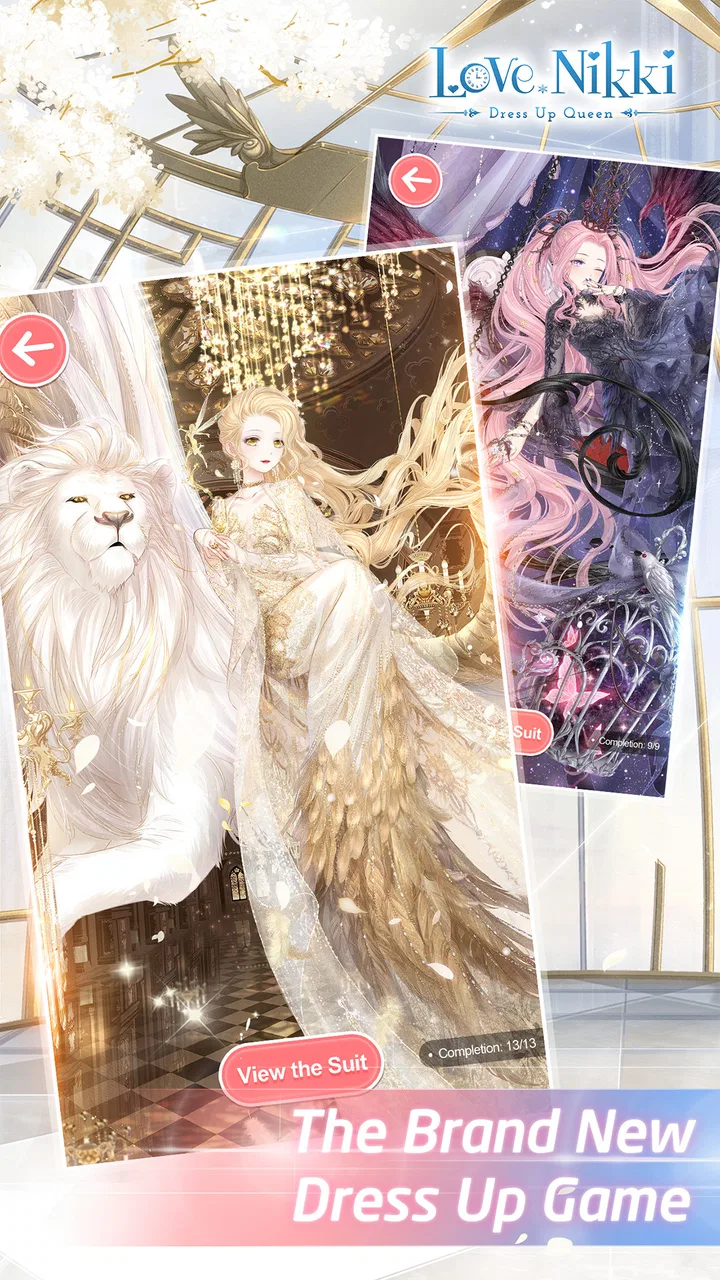
- Beautiful artwork with detailed costumes and accessories
- Story mode adds narrative goals beyond simple dress-up
- Active community makes sharing looks and finding inspiration easy
Cons
- Many premium outfits require diamonds or real-money purchases
- Progress can feel slow without careful resource management
- Events often use time limits that pressure frequent logins
- The large wardrobe can make finding specific items cumbersome
- Requires a stable internet connection for most features

Love Nikki-Dress UP Queen
Gallery